
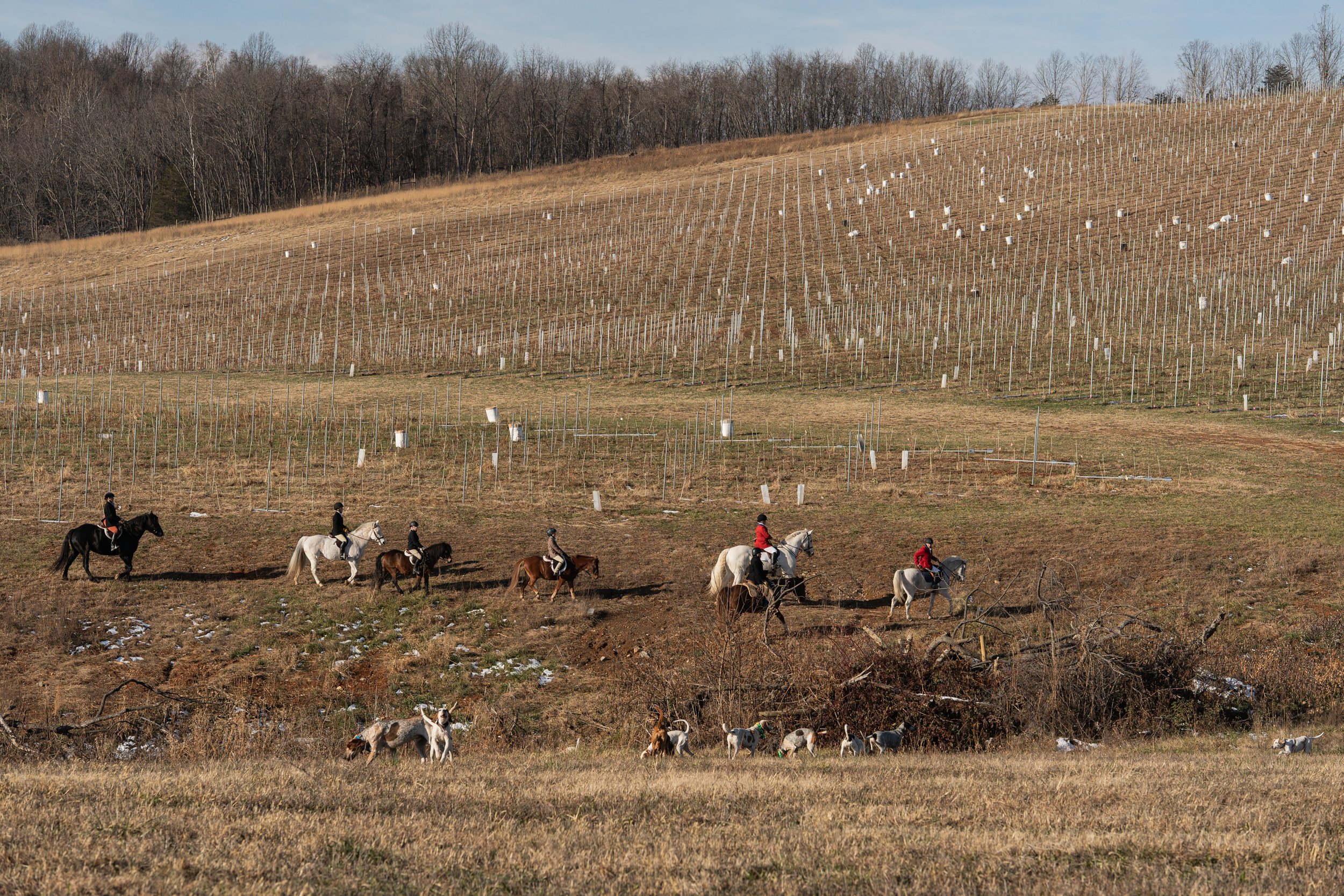
PARTNERING WITH LANDOWNERS
Fox hunting would not be possible without the generosity of landowners who allow hounds, horses, and riders to cross their properties.
We consider access to private land a privilege, not an entitlement. Our goal is to build lasting relationships with landowners throughout the Shenandoah Valley and to be respectful neighbors wherever our hounds hunt.
Our goal is simple: we want to be the kind of neighbor you are happy to have back.
UNDERSTANDING OUR SPORT
-
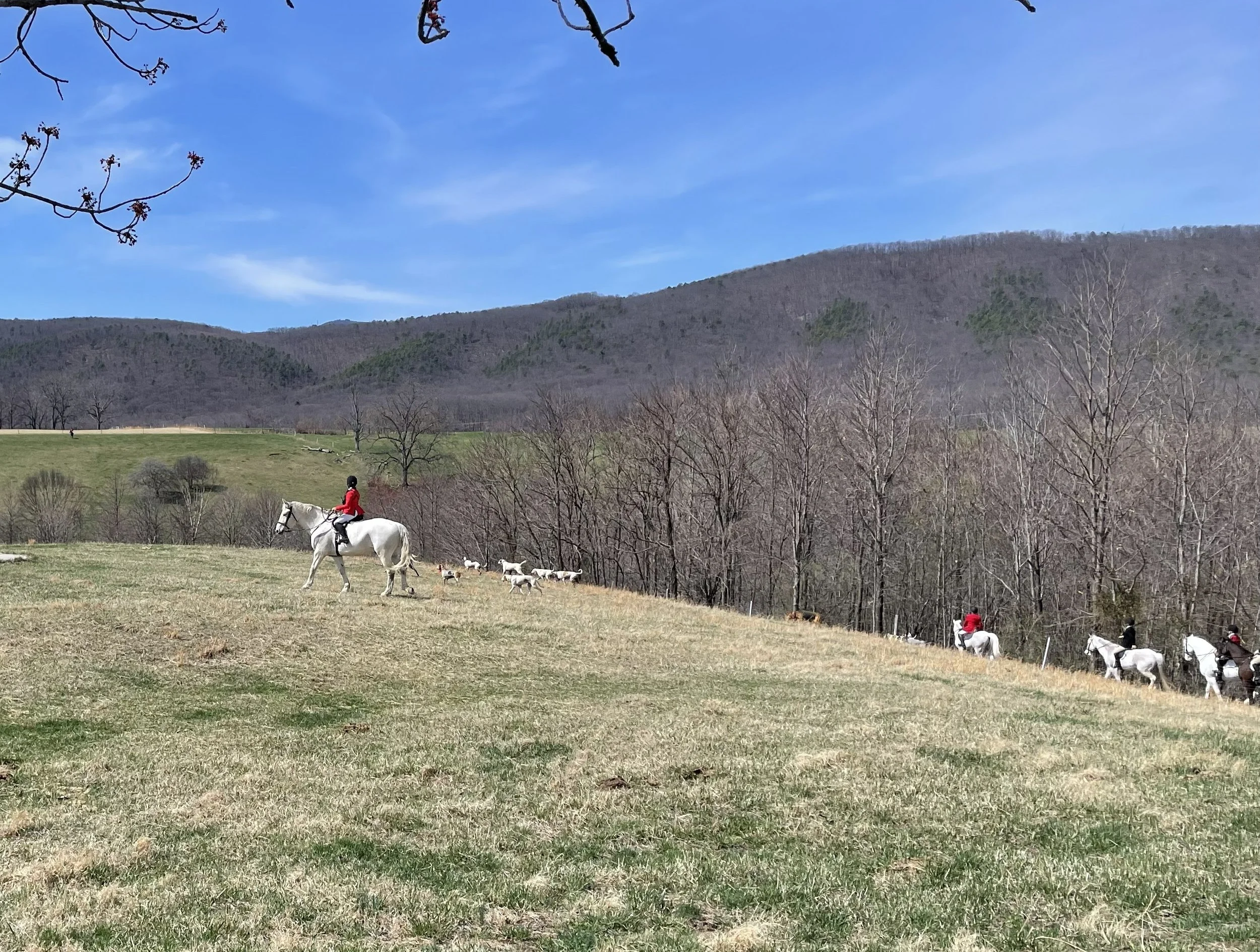
THE CHASE
The Huntsman directs a pack of hounds using voice and horn commands to search for the scent of foxes or coyotes.
-
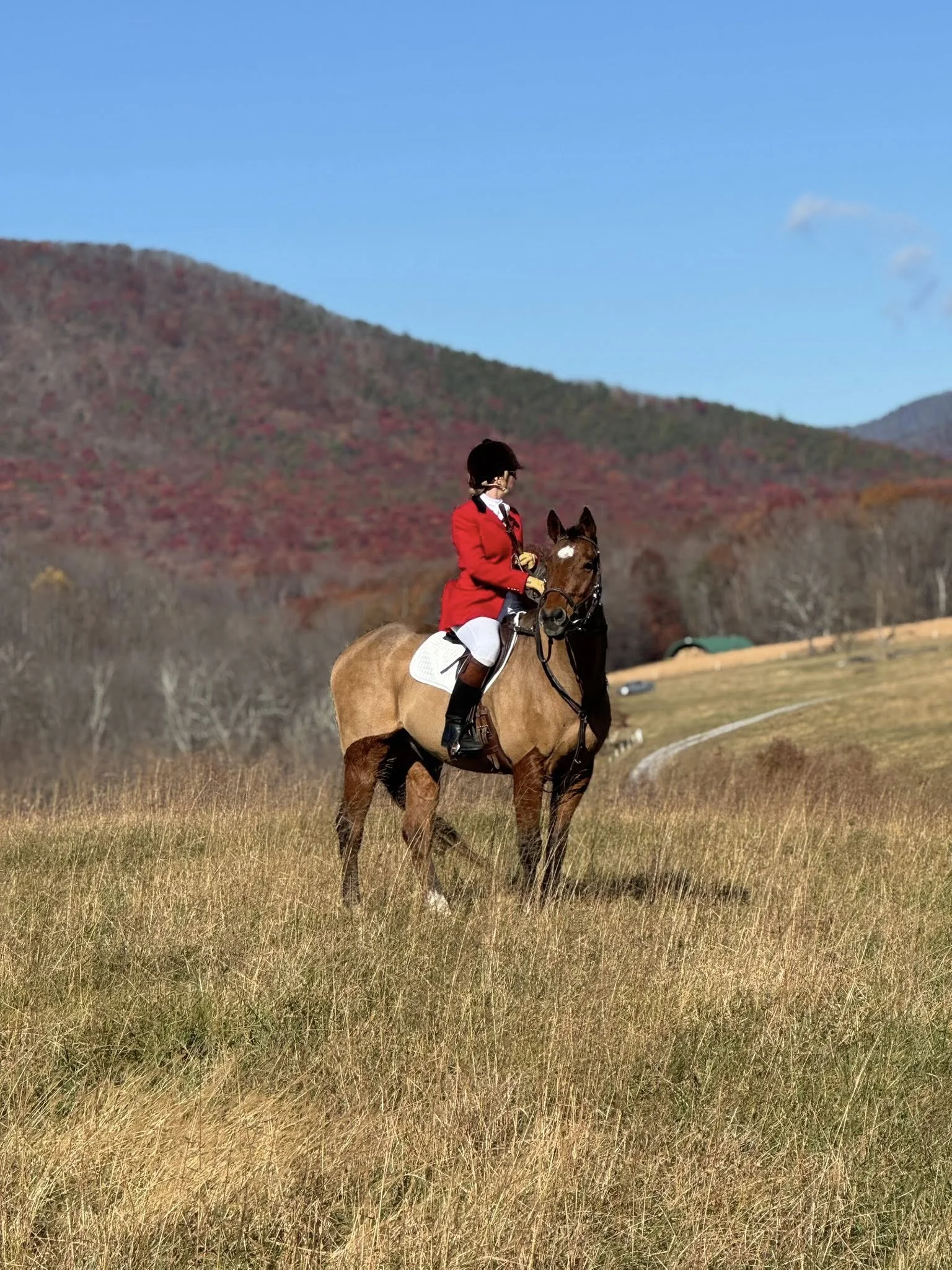
THE STAFF
Mounted Whippers-in or Whips use radio communication and GPS devices to track the hounds. Wheel whips follow in vehicles to keep the hounds safe.
-
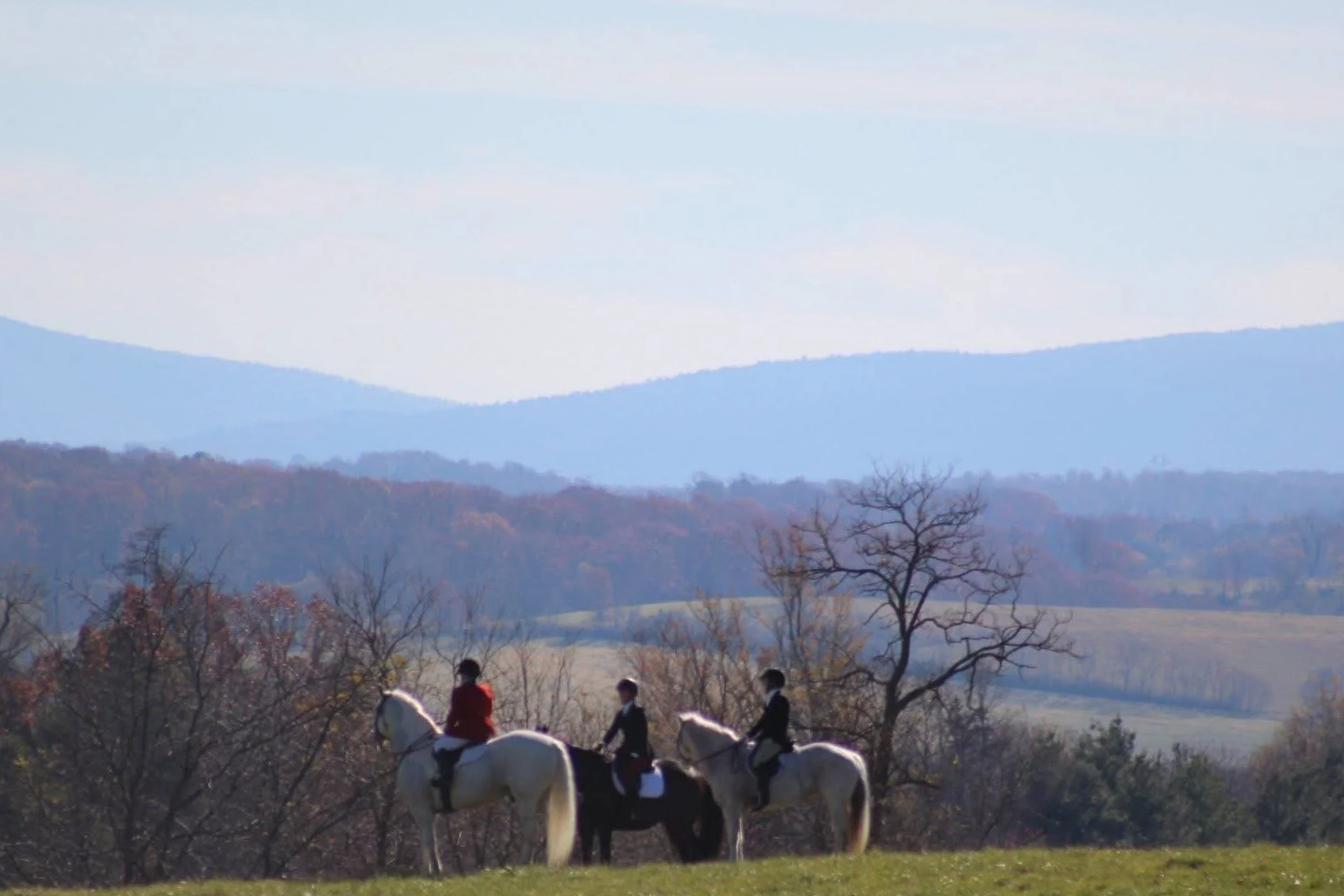
THE FIELD
Spectators follow in groups, called Flights. Typically, there are three flights, a fast, jumping flight, a fast flight that does not jump and a slower flight.
OUR SEASON
Our hunting season generally runs from late August through March, with hunts primarily taking place on Saturdays and certain bye days.
We work closely with each landowner to understand how and when their property may be used. We work with landowners to schedule our visits around planting, growing, and harvesting activities. We understand that agricultural operations take priority, and we will adjust our hunting schedule accordingly.
We also do not assume that permission to hunt means unlimited access or unrestricted use of your property. If you have livestock, crops, sensitive areas, gates, roads, or other considerations you would like us to be aware of, we will work with you to establish appropriate boundaries and expectations.
Our goal is to make hunting with Fort Defiance Hounds as predictable, respectful, and unobtrusive as possible for the people who live and work on the land we are privileged to use.
WHAT TO EXPECT
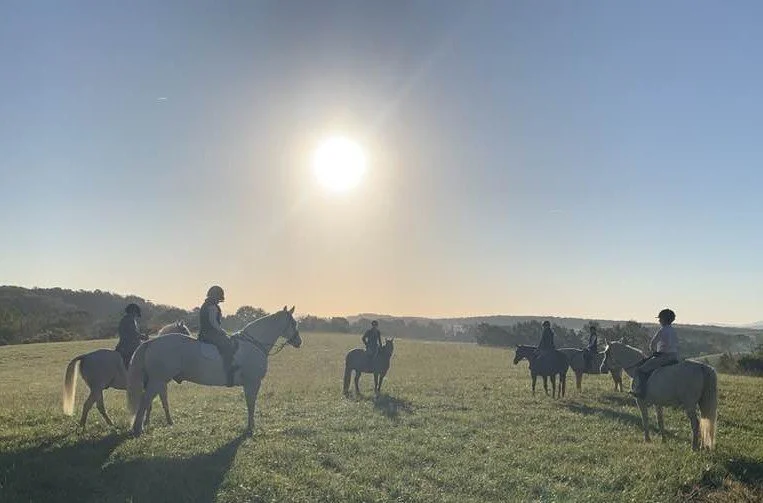
When you allow Fort Defiance Hounds to hunt your property, we will:
Respect your land, livestock, crops, fences, gates, roads, and other improvements.
Follow any reasonable requests or restrictions you establish for your property.
Communicate with you about our use of the property and any changes that may affect you.
Take care to leave gates and access points as we found them.
Encourage every member and guest to treat your property with care and respect.
Address any concerns promptly and directly.
Carry appropriate insurance for our activities.
Require our members and guests to follow hunt rules, safety requirements, and applicable waivers.
We want our landowners to feel comfortable calling us with a question, concern, or request at any time.
VIRGINIA LANDOWNER PROTECTIONS
Virginia law specifically recognizes fox hunting and horseback riding as recreational uses of private property.
Under Virginia Code § 29.1-509, a landowner who allows others to use their property for certain recreational purposes, including foxhunting and horseback riding, generally does not have a duty to keep the property safe for that recreational use or to warn participants about hazardous conditions. Granting permission for recreational use also does not, by itself, create an invitee or licensee relationship.
The statute contains important exceptions, including certain circumstances involving gross negligence, willful or malicious failure to warn, or payment for the use of the property.
Because the application of the law can depend on the circumstances, landowners with specific legal or insurance questions should consult their own attorney or insurance professional.
If you are interested in learning more about fox hunting, have land you may be willing to share, or simply want to talk with us before making a decision, please reach out.
We are happy to answer questions, discuss how we use the land, and work together to determine whether your property would be a good fit.
Thank you to the landowners who make it possible for our hounds and horses to experience the Virginia countryside. Your generosity is at the heart of what we do, and we are grateful for every acre you entrust to us.
INTERESTED IN OPENING YOUR LAND?
FREQUENTLY ASKED QUESTIONS
-
Modern foxhunting is a recreational sport focused on the "thrill of the chase" rather than the harvest of game. Our hounds hunt the scent of a fox or coyote, and we do not kill the quarry. Once the hounds follow a scent line to its conclusion, the huntsman redirects them to a new location.
-
Each hunt typically consists of 6–14 hounds and between 6 and 20 mounted riders. A hunting location or “fixture” will be a minimum of about 300 acres to 600 acres or more.
-
Our season is defined by the Department of Wildlife Resources (DWR) and primarily takes place during the winter months, from August through March. We typically hunt a specific property 1–2 times per month on Saturdays, weather permitting. All schedules are arranged weeks in advance with your explicit permission.
-
Because we hunt primarily in the winter, our activities do not largely overlap with the growing season and do not disturb dormant cropland. If riders encounter a planted field, they are strictly instructed to ride the extreme outer perimeter to avoid soil or crop damage.
-
Our hounds are professionally trained to not interact with livestock, and riders are required to give cattle a wide berth to avoid disrupting the herd. We use radio communications to pass vital information regarding gate status and livestock locations; all gates are left exactly as they were found.
-
Virginia landowners are protected under the Equine Activity Liability Act (Chapter 62 of the Code of Virginia). This law states that an equine activity sponsor or "any other person" (including corporations or partnerships) shall not be liable for the death or injury of a participant resulting from the intrinsic dangers of equine activities.
-
Per the Code of Virginia (§ 3.2-6203), receiving monetary compensation changes the threshold for liability. By not providing payment, we ensure you maintain the highest level of statutory protection under the state's liability limits.
-
Landowners often find it beneficial to have "additional eyes" on their property. Our riders can alert you to downed fences, open gates, or sick and injured livestock, such as a recent instance where fox hunters alerted a farmer to the birth of a twin calf that may not have otherwise survived.